
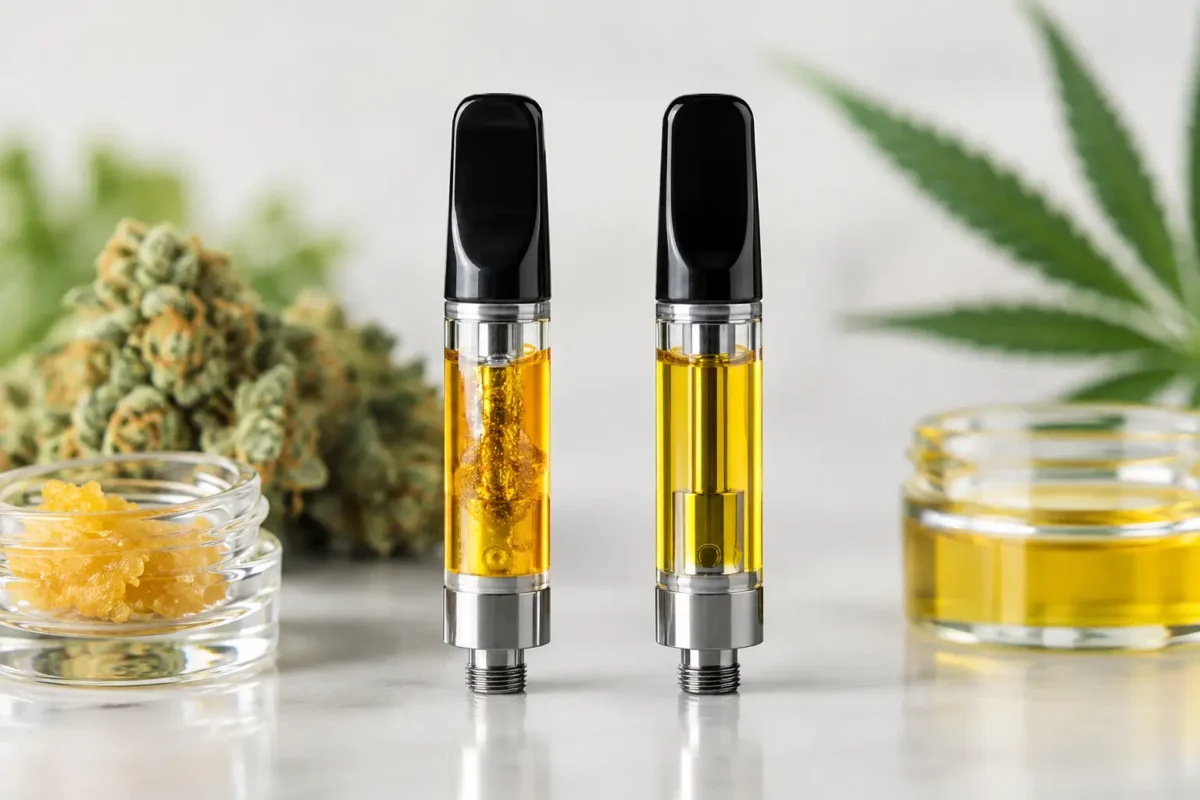
A cart can look simple from the outside: a glass tank, a mouthpiece, and a 510-thread battery. What is inside makes the real difference. When comparing live resin versus distillate carts, the choice usually comes down to what you value most – bold strain-like flavor and a fuller cannabinoid profile, or straightforward potency, consistency, and value.
For adult hemp shoppers, neither option automatically wins. The better cart is the one that fits your preferred experience, budget, and comfort level. Start with transparent testing, clear cannabinoid labeling, and a trusted source. Then decide whether you want the character of a plant-forward extract or the clean simplicity of distillate.
Live resin versus distillate carts at a glance
Live resin carts are made with an extract that aims to preserve more of the aromatic compounds found in the hemp plant. Producers typically freeze fresh plant material shortly after harvest rather than drying and curing it first. This helps retain volatile terpenes, the compounds largely responsible for the plant’s aroma and flavor.
Distillate carts use a highly refined cannabinoid extract. The process separates and concentrates specific cannabinoids, creating an oil that is often high in a featured cannabinoid such as CBD, delta-8 THC, or hemp-derived delta-9 THC. Terpenes may be removed during refinement and added back later to create a particular flavor or strain-inspired profile.
That difference affects more than the label. Live resin often tastes more layered and botanical, while distillate is usually more uniform from one batch to the next. Live resin may appeal to shoppers who care about terpene expression. Distillate can be a smart pick for shoppers who want reliable potency without paying a premium for a more complex extraction process.
What live resin carts bring to the table
The main draw of live resin is the sensory experience. A quality live resin cart can deliver aromas that feel closer to fresh hemp flower: citrus, pine, berry, earth, pepper, or gas notes depending on the cultivar and terpene makeup. For shoppers who already pay attention to strains, this can make vaping feel more connected to the plant.
Flavor and terpene character
Terpenes do not merely make a cart taste better. They also help explain why two products with similar cannabinoid percentages can feel noticeably different from one another. A limonene-forward cart may have bright citrus notes, while a myrcene-rich option may taste earthier and more herbal. Individual responses vary, so flavor and ingredient transparency are better shopping signals than promises about a specific feeling.
With live resin, those natural compounds may be retained in a more representative ratio. That is why live resin frequently has a stronger aroma than standard distillate. It is also why a good live resin vape may cost more.
A more plant-forward profile
Live resin is not automatically “better” because it is less refined. Quality still depends on the source material, extraction standards, hardware, storage, and lab results. But for adults seeking a richer, strain-led hemp vape, it is often the more compelling format.
There is a trade-off. High-terpene extracts can feel more intense on the palate, and some people simply prefer a smoother, more neutral-tasting vape. Because the profile is more nuanced, the experience can also vary more between strains and batches than with a straightforward distillate formula.
Why distillate carts remain a popular choice
Distillate has earned its place for good reasons. It is efficient, potent, widely available, and usually easier on the budget. When a brand starts with clean, tested material and clearly identifies every cannabinoid and terpene in the formula, a distillate cart can be an excellent everyday option.
Predictable potency and easy comparison
Distillate makes it easier to compare products by cannabinoid content. If you are shopping for a cart centered on CBD, delta-8 THC, or another hemp-derived cannabinoid, the label often provides a clear milligram amount and concentration. That helps price-conscious shoppers compare similar products without guessing.
The refined oil is also typically consistent in appearance and texture. For someone who wants a familiar, repeatable option, that consistency matters. Distillate carts are particularly practical when you know which cannabinoid you prefer and are less concerned with capturing the fine details of a specific hemp strain.
More options at accessible prices
Because distillate is common and scalable, brands can create more flavor choices at lower price points. You may find fruit-forward options, dessert-style flavors, or cannabis-inspired terpene blends. These can be enjoyable, but they should be labeled honestly. A cart with added botanical terpenes is not the same thing as a true live resin cart, even if the package uses a strain name.
Potency is not the whole story
A higher percentage on a package does not always equal a better experience. In live resin versus distillate carts, potency should be read alongside the cannabinoid type, serving size, terpene content, and your own tolerance.
A potent distillate cart may suit an experienced adult who wants a direct cannabinoid-forward experience. A live resin cart with a broader profile may feel more satisfying to someone who prioritizes flavor and a more rounded session. Neither description guarantees an outcome. Bodies, tolerances, settings, and product formulas all differ.
If you are new to hemp vapes, use a low-and-slow approach. Take one small puff, wait to see how you feel, and avoid stacking doses because the flavor is enjoyable. Do not drive, work with machinery, or mix intoxicating cannabinoids with alcohol or other substances.
How to choose the right cart for your routine
Choose live resin if you want pronounced hemp flavor, enjoy comparing strain profiles, and are comfortable spending a little more for a more aromatic extract. It can be an especially good fit when you want your vape to feel less generic and more connected to the source plant.
Choose distillate if your priorities are clear cannabinoid potency, consistent performance, broad flavor selection, and value. It is often the easier category to shop when you have a specific cannabinoid in mind or want a dependable cart for occasional use.
Whichever direction you take, do not let the front label make the whole decision. A premium-sounding name means little without proof behind it. Before buying, check that the brand provides a current third-party certificate of analysis, or COA, for the batch. The report should support cannabinoid claims and screen for contaminants such as pesticides, heavy metals, residual solvents, and microbial impurities.
Also look at the ingredient list. A strong hemp vape formula should be clear about what is in the oil. Be cautious with vague descriptions, unexplained additives, and products that provide no batch information. Avoid carts that use vitamin E acetate or make oversized wellness promises.
Hardware and storage matter, too
Even great oil can disappoint in poor hardware. A well-made cartridge should resist leaking, produce steady vapor, and avoid a burnt taste at a reasonable voltage. Thick live resin oil may perform best with a compatible ceramic coil and gentle heat. Turning a variable-voltage battery too high can scorch terpenes and flatten the flavor of either extract.
Store carts upright in a cool, dark place. Heat and direct sunlight can thin the oil, degrade flavor, and increase the chance of leaks. If a cart gets cold and the oil becomes too thick, let it warm naturally in your hand before using it. Do not use open flames or extreme heat to force the oil to move.
A quick note on hemp legality
Hemp-derived products may be federally legal when they meet applicable federal requirements, including limits on delta-9 THC by dry weight. However, state laws and shipping restrictions can differ, especially for intoxicating hemp-derived cannabinoids. Product availability is not a guarantee of legality where you live.
Buy only as an adult, review your local rules, and choose sellers that take compliance seriously. At Royale Hemp, that means prioritizing clear product information and third-party lab-tested hemp options so you can shop with more confidence.
The best cart is not the one with the flashiest label or the highest number. Pick live resin when you want the plant’s personality to come through, and choose distillate when clean consistency and value fit the moment better.
📅 Last updated:

 Edibles
 Hybrid Flower – THCA