
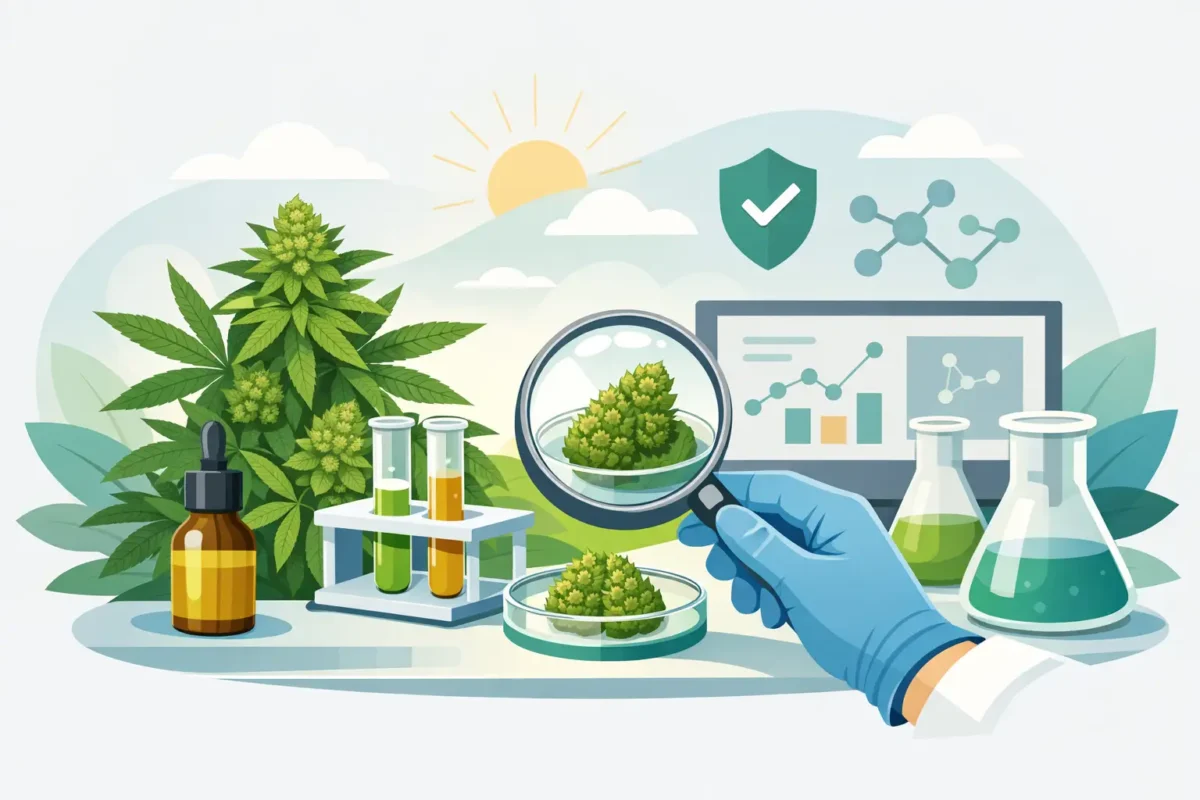
A great-looking jar can tell you a little about hemp flower. It cannot tell you whether the product is clean, accurately labeled, or compliant. That is why lab tested hemp flower should be the baseline for every online purchase, whether you are shopping for calming CBD buds, aromatic CBG flower, or cannabinoid-rich THCA options. When choosing a product, prioritize lab tested hemp flower for peace of mind.
For adult shoppers, third-party testing is not just a marketing phrase. It is the paperwork behind the purchase. A current certificate of analysis, commonly called a COA, gives you a closer look at what is actually in the flower before it reaches your door. When you know how to read one, you can shop with more confidence and spend your money on quality instead of guesswork.
Why Lab Tested Hemp Flower Matters
Hemp is an agricultural product. Its cannabinoid profile can vary by strain, growing conditions, harvest timing, curing practices, and storage. Two batches carrying the same strain name may not have identical potency or terpene levels. Testing provides a batch-specific snapshot rather than relying on broad promises printed on a label.
Investing in lab tested hemp flower can enhance your experience and ensure you are consuming quality products.
For Royale Hemp shoppers, that transparency matters because hemp flower is personal. One customer may be looking for a mellow evening ritual after a demanding day. Another may prefer a clear-headed daytime strain with a brighter aroma. A COA cannot predict exactly how you will feel, but it can help confirm whether the flower contains the cannabinoids and compounds the seller says it does.
Selecting lab tested hemp flower allows you to experience the true benefits of hemp without worrying about unknown additives.
Third-party testing also creates accountability. The laboratory should be separate from the grower, manufacturer, or retailer, reducing the risk of a brand grading its own work without independent review. Reputable vendors make current reports accessible and tie them to specific product batches or lots.
What a Hemp Flower COA Should Show
A certificate of analysis can look technical at first. You do not need a chemistry degree to use it well. Start by checking that the report clearly identifies the product or batch, names the laboratory, and includes a test date. A report from a different strain, an old harvest, or an unrelated batch is not enough.
Cannabinoid potency
The cannabinoid panel lists compounds such as CBD, CBDA, CBG, CBGA, Delta-9 THC, THCA, and sometimes minor cannabinoids. Depending on the lab, results may appear as percentages by weight or milligrams per gram.
For federally compliant hemp, the key number is total Delta-9 THC on a dry-weight basis. Federal law defines hemp as cannabis containing no more than 0.3% Delta-9 THC by dry weight, but state rules and shipping restrictions can vary. Responsible shoppers should always check their local laws before ordering.
THCA deserves a closer look. THCA is a naturally occurring acidic cannabinoid that can convert to Delta-9 THC when heated. That means a flower’s legal classification, labeling, and expected experience may depend on the testing method and the rules where you live. Do not assume that every hemp-derived flower has the same effect or legal status simply because it is sold online.
Choosing lab tested hemp flower ensures you’re not just relying on a label but rather on verified information.
Safety screening
Potency is only part of the report. Quality testing should also screen for potential contaminants. Depending on the product and laboratory, that can include pesticides, heavy metals, residual solvents, microbial contaminants, mycotoxins, and foreign material.
A clean result may be displayed as “pass,” “not detected,” or a measurement below the lab’s reporting limit. Read the report carefully. “Not detected” does not always mean absolute zero, but it generally means the substance was not found above the lab’s stated detection threshold.
Residual solvent testing is especially relevant for extracts and infused products. For straightforward, unaltered hemp flower, pesticide, heavy metal, and microbial panels are often the most useful safety checks. If a vendor cannot provide testing information or only shares a cropped potency image, consider that a reason to keep shopping.
Terpenes and freshness clues
Some COAs include terpene testing. Terpenes are aromatic compounds that contribute to the flower’s scent and flavor profile, from citrus and pine to berry, herbal, or earthy notes. They may also influence the character of a strain when combined with cannabinoids, though individual results vary.
A reliable source of lab tested hemp flower enhances your ability to make informed choices.
A terpene report is a helpful extra, not a replacement for contaminant screening. Freshness also cannot be proven by a COA alone. When your flower arrives, look for intact buds, a pleasant natural aroma, proper packaging, and a reasonable moisture level. A flower that is overly dry, dusty, or dull-smelling may not deliver the experience you expected, even if its original lab test looked strong.
A Quick Checklist Before You Buy
Remember, lab tested hemp flower should always come with proper documentation to back its claims.
When comparing lab tested hemp flower, use the same practical standards you would apply to any wellness product you bring into your routine:
-
- Confirm the COA matches the exact product name, batch, or lot number.
- Check that the report is from an independent laboratory and is reasonably current.
- Review the cannabinoid results instead of relying only on a front-label potency claim.
The safety of lab tested hemp flower is crucial for ensuring the absence of contaminants.
- Look for contaminant screening that fits the product type.
- Verify that the seller gives clear product details, age requirements, and compliance information.
Price matters, especially when you are building a regular hemp routine. But the cheapest ounce is not always the best value. Poor curing, weak aroma, stale buds, vague testing, and confusing labels can turn a low price into a disappointing purchase. Affordable flower should still come with clear documentation and a standard of quality you can recognize.
How to Choose the Right Tested Flower for Your Routine
Start with your preferred cannabinoid profile, not just the highest percentage on the page. CBD flower is a familiar choice for shoppers who want a non-intoxicating, hemp-forward option for relaxation and everyday wellness. CBG flower is often chosen by people who enjoy a more crisp, uplifting profile. THCA flower appeals to experienced, cannabis-adjacent consumers seeking a stronger cannabinoid experience where it is legally available.
Then consider the strain’s aroma and your preferred time of use. A terpene-rich flower with floral, citrus, or pine notes may feel like a better fit for a daytime reset, while earthier, sweeter, or more relaxing profiles may suit an evening wind-down. These are starting points, not guarantees. Your tolerance, method of use, dose, setting, and individual body chemistry all matter.
If you are new to hemp flower, keep the first session simple. Choose a comfortable setting, start with a small amount, and give yourself time to understand the product. Avoid mixing cannabinoids with alcohol or other substances that can change how you feel. If you take medication, are pregnant or nursing, or have a medical condition, speak with a qualified healthcare professional before adding hemp-derived products to your routine.
Understanding the importance of lab tested hemp flower can elevate your wellness journey.
Lab Reports Build Trust, but They Are Not the Whole Story
Testing is one of the strongest signals that a hemp brand takes quality seriously. Still, a COA should be part of a bigger picture. Look for US-grown sourcing when that matters to you, transparent descriptions, sensible storage, responsive customer support, and vendors that do not make exaggerated health claims.
Be cautious of promises that a strain will cure anxiety, treat pain, replace medication, or work exactly the same for everyone. Hemp flower may be part of a personal wellness routine, but it is not a substitute for professional medical care. The most trustworthy sellers set realistic expectations while giving you the information needed to make an informed choice.
A good flower purchase should feel straightforward: you can see what you are buying, understand its cannabinoid profile, review its test results, and decide whether it fits your budget and lifestyle. That is the standard worth expecting every time.
The confidence that comes with selecting lab tested hemp flower is unmatched.
The next time a strain catches your eye, do not stop at the photo or the potency number. Ask for the batch report, read it with intention, and choose flower that gives you a reason to feel confident before the package ever arrives.
Ultimately, choosing lab tested hemp flower should be a priority for every consumer.

 Hybrid Flower – THCA