

A quality THCA flower can look and smell exceptional straight from the bag, but raw flower behaves differently when you use it in an edible or homemade infusion. Knowing how to decarboxylate THCA flower helps you prepare it with controlled heat, rather than guessing with a too-hot oven and losing the flavor compounds you paid for. Understanding how to decarboxylate THCA flower is essential for making effective infusions.
Decarboxylation sounds technical, but the home process is simple: low, steady heat changes THCA into THC. The details matter because too little heat may leave the flower under-activated, while too much heat can degrade cannabinoids and drive off the aromatic terpenes that give a strain its character.
Learning how to decarboxylate THCA flower correctly ensures optimal flavor and potency in your final product. Mastering this process opens up a world of culinary possibilities with THCA flower.
What Decarboxylating THCA Flower Does
THCA is the naturally occurring acidic cannabinoid found in both fresh and cured THCA flower. On its own, THCA is different from delta-9 THC. When the flower is heated, a chemical group called a carboxyl group is released, usually as carbon dioxide. That process converts much of the THCA into THC.
If you smoke or vape THCA flower, the heat from combustion or vaporization handles this process as you use it. You generally do not need to decarb flower before rolling it or packing it into a bowl. Decarbing is most useful when you plan to make infused butter, oil, baked goods, capsules, or other recipes that will not receive enough sustained heat to activate the flower on their own.
If you’re unsure about how to decarboxylate THCA flower, start with small batches to perfect your technique, ensuring each infusion is the best it can be.
The result depends on the starting material, time, temperature, moisture level, and how evenly your oven heats. There is no method that produces perfectly identical results every time, but a careful oven decarb is reliable for most home users.
How to Decarboxylate THCA Flower in an Oven
Knowing how to decarboxylate THCA flower properly will significantly enhance your homemade infusions, making them more effective and enjoyable.
For most people, an oven is the easiest method because it uses equipment already in the kitchen. You will need THCA flower, a baking sheet, parchment paper, an oven, and ideally an oven thermometer. A timer helps, too.
1. Check Your Flower Before You Begin
Start with clean, properly stored flower from a source that provides third-party lab results. Freshness matters. An overly dry flower may decarb faster and lose more terpenes, while a very moist flower can take longer to heat evenly.
Remove any obvious stems and break the buds into small, loose pieces with clean fingers. Avoid grinding the flower into a fine powder. Small pieces allow heat to reach the plant material, but finely ground flower can toast too quickly and become harder to strain from the infusion.
2. Set the oven to 230°F.
Before you set the oven, take a moment to consider the importance of understanding how to decarboxylate THCA flower for the best results.
Set your oven to 230°F. A useful range is roughly 220°F to 240°F, but 230°F is a practical middle ground for balancing activation with terpene preservation. Let the oven fully preheat before the flower goes in.
Home ovens are not always accurate, especially at lower temperatures. An inexpensive oven thermometer can make a real difference. If your oven regularly runs hot, set it lower or shorten the decarb time slightly. High heat is the most common reason home decarbs come out overly dark, harsh, or lacking in aroma.
3. Spread the Flower in One Loose Layer
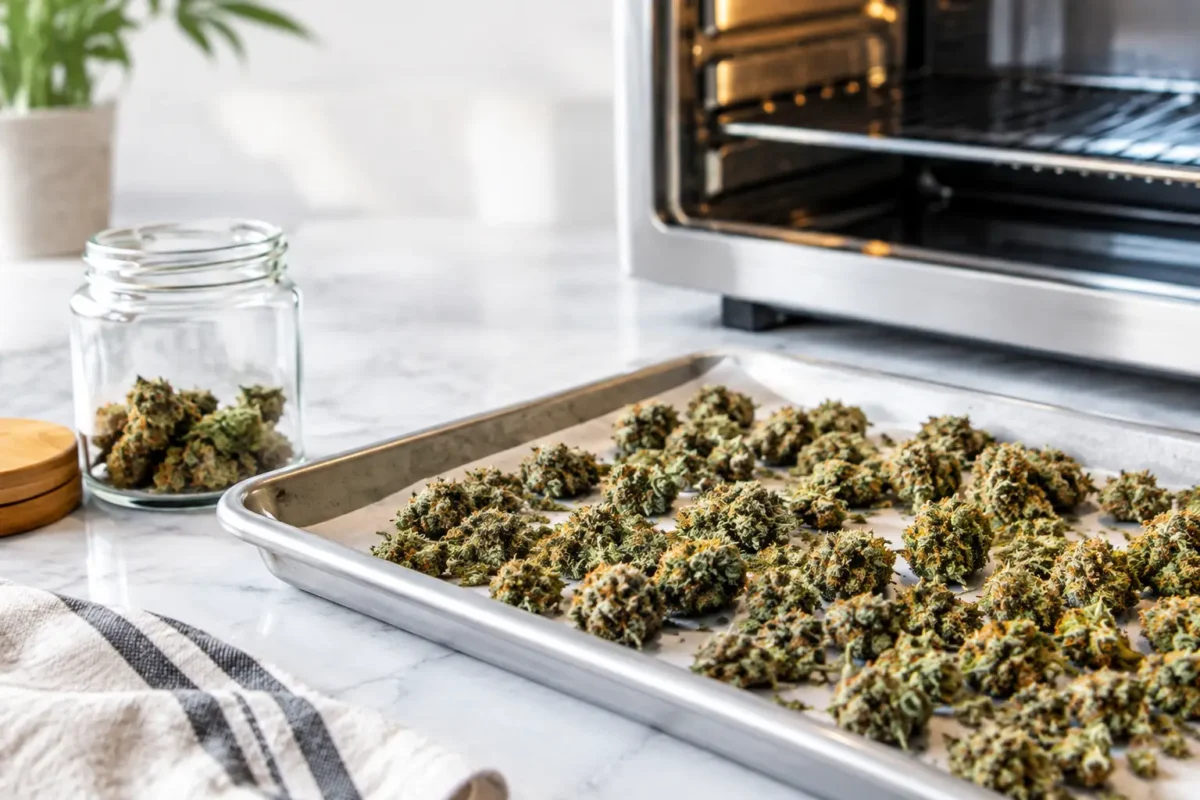
Line a baking sheet with parchment paper and distribute the broken-up flower in a single, loose layer. Do not pile it into a mound. Even spacing lets warm air circulate and helps prevent some pieces from heating far more than others.
Place the sheet on the center rack. The center of the oven tends to offer the most stable heat, away from intense direct heat from the top or bottom elements.
4. Heat for 30 to 40 minutes.
Bake the flower for 30 to 40 minutes at 230°F. Gently stir or shake the tray once about halfway through if you can do so without leaving the oven door open for long.
You are looking for a slightly darker color, usually light to medium brown with some olive tones. It should be dry and fragrant, but not blackened or visibly scorched. Aroma will be noticeable, so plan accordingly and keep your kitchen ventilated.
Very dry, finely broken flower may be ready closer to 25 to 30 minutes. Larger or denser pieces may need closer to 40 minutes. More time is not automatically better. Once a flower becomes dark brown or nearly black, you are likely sacrificing quality rather than improving activation.
5. Let It Cool Before Using or Storing
After learning how to decarboxylate THCA flower, you may also want to explore various recipes to maximize its usage in your kitchen.
Remove the baking sheet and let the decarbed flower cool completely at room temperature. Do not immediately seal it in a container while it is hot. Trapped warmth and moisture can create condensation, which is not ideal for storage.
Once cool, use the flower in your infusion or store it in an airtight glass jar in a cool, dark cabinet. Label the jar clearly. Decarbed flower can look similar to ordinary flower, and clear labeling helps keep your pantry organized and avoids mix-ups.
Common Decarb Mistakes to Avoid
The biggest mistake is using a high temperature to finish faster. A 300°F oven may seem efficient, but it can burn off delicate compounds and leave you with a flat-tasting final product. Lower, controlled heat requires patience, but it gives you a better chance of preserving the qualities that made you choose that strain.
Another mistake is treating a standard baking time as a guarantee. Ovens vary widely. If your first batch comes out much darker than expected, reduce the temperature by 10°F to 15°F next time, verify it with a thermometer, or shorten the session. Keeping brief notes on the strain, temperature, and timing can help you dial in a method that works in your kitchen.
Avoid covering the tray tightly with foil. It may reduce odor somewhat, but it can also trap moisture and make the flower heat less predictably. If odor is a major concern, a heat-safe, loosely covered glass baking dish can be an option, although it may require a little more time. Do not use a sealed container in the oven, since pressure can build as the contents heat.
Can You Decarb THCA Flower in Other Ways?
Ultimately, knowing how to decarboxylate THCA flower plays a crucial role in achieving the desired effects and flavors in your homemade products.
Yes, but the oven remains the simplest place to start. A purpose-built decarboxylator offers more precise temperature control and may contain more odor, which can be worthwhile for frequent home infusers. A sous vide setup can also provide steady heat when the flower is sealed in an appropriate heat-safe bag, though it takes longer and requires more equipment.
Microwaves are usually a poor choice. Their heating is uneven, temperature control is limited, and it is easy to overheat parts of the flower. A slow cooker can work for infusing after decarbing, but it is less reliable than the decarb step itself unless you have carefully tested its actual temperature.
Using Decarbed Flower in Homemade Infusions
Decarbed flower can be infused into fat-based ingredients such as butter, coconut oil, or other cooking oils. Cannabinoids are fat-soluble, so an infusion is often more practical than adding decarbed flower directly to a recipe. Keep the infusion temperature low and steady, then strain out the plant material before using the finished oil or butter.
Start conservatively when trying a homemade edible. Potency can vary significantly based on the THCA percentage of the original flower, how thoroughly it decarbed, the amount used, and the efficiency of the infusion. Effects from edibles can take much longer to appear than inhaled products, so give a serving plenty of time before considering more.
Adult consumers should also check the rules where they live. Hemp-derived products may be federally defined differently from marijuana under certain conditions, but state and local laws can vary, and heating THCA flower changes its cannabinoid profile. Keep all cannabinoid products secured away from children and pets.
Quality flower deserves a measured approach. Choose lab-tested products, keep your temperature steady, and let the flower cool before turning it into your next homemade infusion. A little patience at the decarb stage can make the rest of your recipe feel far more intentional.
By practicing how to decarboxylate THCA flower effectively, you will enhance your culinary experience and create delicious, potent edibles.

 Edibles
 Hybrid Flower – THCA