

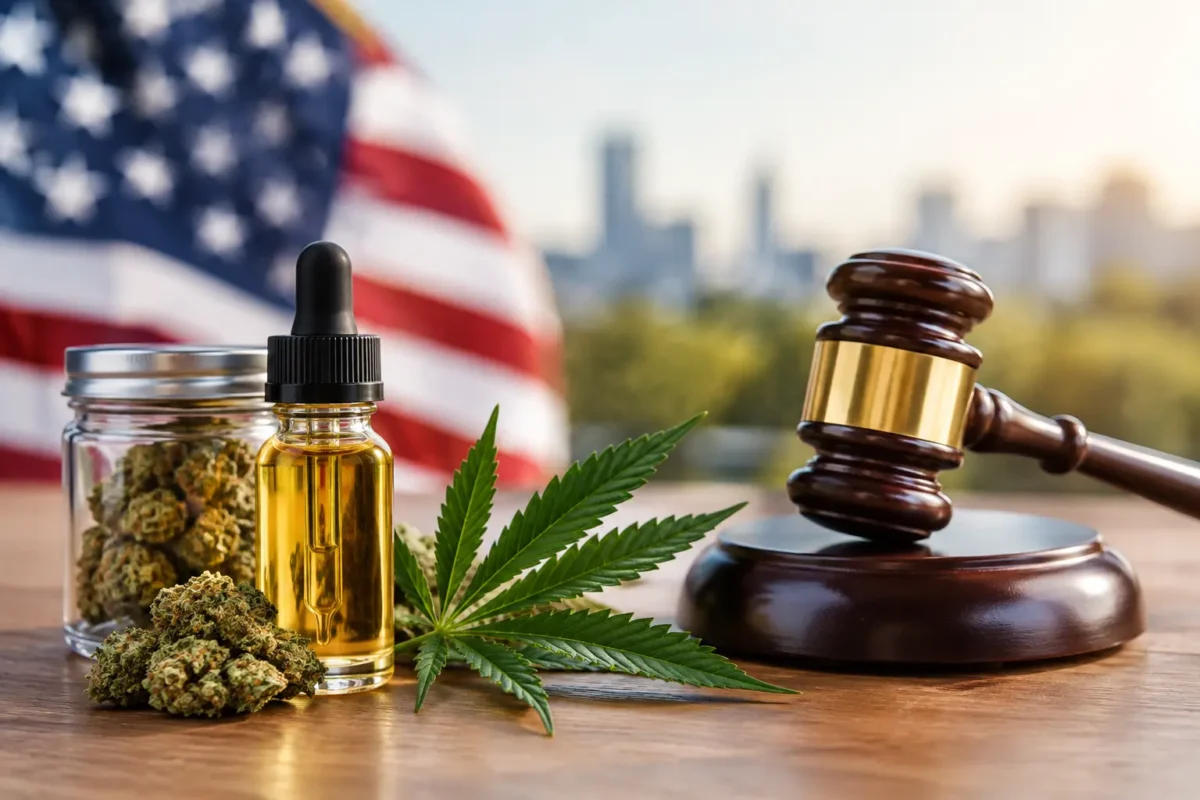
A hemp product can be federally legal, sold online, and shipped to many states, yet still leave shoppers with a challenging question at checkout: what exactly is in it, how will it feel, and is it permitted where I live? The future of legal cannabinoids will be decided by how well the industry answers those questions. The next phase is not simply about more cannabinoids on a product label. It is about clearer rules, higher standards, and better-informed adult consumers. The future of legal cannabinoids encourages transparency and education.
For people who want accessible wellness options outside the traditional dispensary system, that is encouraging news. Hemp-derived CBD, THCA flower, edibles, vapes, and minor cannabinoids have created more choice than ever. But choice only helps when quality, labeling, and legality are straightforward to understand.
As we navigate the future of legal cannabinoids, understanding the differences between products will become increasingly important.
The future of legal cannabinoids looks promising with the evolution of consumer awareness and industry regulation.
The Future of Legal Cannabinoids Will Favor Clarity
Exploring the Future of Legal Cannabinoids
In this discussion, we must consider the future of legal cannabinoids and how it shapes market dynamics.
The 2018 Farm Bill created the federal framework that made hemp commerce possible by distinguishing hemp from marijuana based on delta-9 THC concentration by dry weight. That distinction opened the door for a national hemp market, but it also created gray areas around intoxicating hemp-derived products, converted cannabinoids, serving sizes, and state-level restrictions.
Those gray areas are unlikely to be resolved quickly. Federal lawmakers, state regulators, public health agencies, and the hemp industry do not always agree on the right approach. Some states have taken a restrictive path toward certain hemp-derived intoxicants, while others permit them under testing, age-gating, or packaging requirements. That means legality can depend on both the product and the destination.
The likely direction is more definition, not less. Expect stronger attention to age restrictions, potency limits, product categories, contaminant testing, child-resistant packaging, and transparent ingredient disclosures. These changes may make some products harder to find in certain markets. It can also make the products that remain easier to trust.
For shoppers, the practical takeaway is simple: do not treat the word “legal” as a blanket promise. Read the label, check current state rules, and buy from sellers that explain what they carry instead of hiding behind vague claims.
Ultimately, the future of legal cannabinoids relies on informed consumers making educated choices.
Better Testing Will Separate Serious Brands From Shortcuts
Third-party lab testing has become one of the clearest signals of a serious hemp product. In the years ahead, a basic cannabinoid potency result will not be enough for educated shoppers. They will want a current certificate of analysis that identifies the batch and covers the details that matter.
The importance of testing will only grow as the future of legal cannabinoids unfolds.
That includes cannabinoid potency, but it should also cover screening for pesticides, heavy metals, residual solvents, microbial contaminants, and mycotoxins when relevant. A flower product, vape cartridge, gummy, and tincture do not carry identical risks, so appropriate testing should reflect the format.
The trade-off is cost. Thorough testing, compliant packaging, and responsible sourcing are not free. Extremely cheap products can be tempting, especially when cannabinoid percentages look impressive. But a low price means little if the formula is mislabeled, the lab report is outdated, or the product comes from an unknown source.
As such, understanding the future of legal cannabinoids will be vital for consumers seeking quality.
This is where curation matters. Royale Hemp focuses on helping shoppers find federally legal, third-party lab-tested hemp products without turning product discovery into a research project. That kind of guidance will become more valuable as shelves fill with similar-sounding cannabinoids and confusing potency claims.
Labels Need to Explain Effects Without Overpromising
Even labels need to evolve alongside the future of legal cannabinoids to meet consumer needs effectively.
Cannabinoid labels are getting more sophisticated, but the language still needs work. Terms such as “relaxing,” “uplifting,” “sleep,” and “focus” can help shoppers compare products, yet they are not guarantees. Effects vary with dose, personal tolerance, body chemistry, whether someone has eaten, and the product’s full cannabinoid and terpene profile.
Responsible brands will keep wellness language grounded. CBD may fit into a calming routine for some adults, while THCA flower may appeal to experienced hemp consumers looking for a more familiar flower experience. A low-dose edible may be easier for a beginner to approach than a high-potency vape, but edibles can take longer to take effect and last longer, too.
As we consider the future of legal cannabinoids, brands must communicate clearly with their consumers.
The future belongs to companies that teach shoppers how to make thoughtful choices rather than promising a one-size-fits-all result.
Minor Cannabinoids Are Becoming More Purposeful
This evolution will be a key aspect of the future of legal cannabinoids as market demands shift.
CBD is still the best-known hemp cannabinoid, but it is no longer the whole conversation. CBG, CBN, CBC, THCV, and other compounds are appearing in more formulas, often alongside familiar CBD or hemp-derived THC options. Consumers are increasingly interested in targeted experiences, not just a generic “hemp product.”
That does not mean every new cannabinoid deserves automatic hype. Research on many minor cannabinoids is still developing, and the source and production method matter. A product formulated with a naturally occurring hemp extract is not necessarily equivalent to one made through extensive chemical conversion. Shoppers deserve to know the difference.
Every product’s potential will be scrutinized more closely as we approach the future of legal cannabinoids.
There is also a real convenience benefit to broader formats. Someone who dislikes smoking may prefer a tincture, capsule, or gummy. Someone who values the ritual and aroma of hemp flower may choose a strain-specific option. A busy adult may want a discreet, measured serving. The best format depends on lifestyle, desired onset time, tolerance, and local rules.
As the market matures, the strongest products will not try to be everything for everyone. They will clearly state the cannabinoid profile, serving size, ingredients, intended format, and available lab documentation.
As brands clarify their offerings, the future of legal cannabinoids will become clearer to consumers.
Hemp Flower Has a Distinct Place in the Market
Hemp flower remains central to the conversation because it offers something formulations cannot fully duplicate: a whole-plant experience. Cannabinoids, terpenes, aroma, freshness, and strain characteristics all shape how a flower product is perceived.
Hemp flower’s role will be integral to discussions about the future of legal cannabinoids.
For many adults, CBD flower offers a smokeable or vapable option with a familiar cannabis-style ritual and a lower-intensity profile than conventional marijuana. THCA flower occupies a more complicated position. Its legal status and treatment can vary by jurisdiction, and heating THCA changes its chemical profile. That makes it especially important to review product information and the laws where you live before buying or using it.
Quality will increasingly show up in the basics: US-grown sourcing, proper curing, realistic cannabinoid numbers, fresh packaging, and batch-specific testing. A loud strain name cannot replace good cultivation and honest documentation.
Understanding these elements will shape the future of legal cannabinoids for consumers.
What Adult Shoppers Should Expect Next
The most useful change may be a less confusing shopping experience. Instead of forcing consumers to decode technical terms alone, reputable retailers will organize products by format, cannabinoid profile, strength, and practical goals such as daytime balance, evening relaxation, or a smoke-free routine. That is not medical advice. It is a better starting point for comparison.
Ultimately, the trajectory of the future of legal cannabinoids is in consumer hands.
Shoppers should also expect more responsible boundaries. Age verification, clearer warnings, serving guidance, and packaging designed to reduce accidental access are signs of a market growing up. They may feel less exciting than flashy marketing, but they protect consumers and help preserve access to legal hemp products.
Before trying a new cannabinoid product, start low and give your body time to respond. Avoid mixing intoxicating products with alcohol or driving after use. If you take prescription medications, are pregnant or nursing, or have a medical condition, speak with a qualified healthcare professional first. And because laws move quickly, confirm current rules in your state before ordering.
The evolving landscape will continuously redefine the future of legal marijuana in the market.
A Better Market Is Worth Waiting For
The future of legal cannabinoids may not be simpler in every state or every product category. More oversight may limit some options, and the rules may keep changing before they settle. Still, a market built on truthful labels, credible testing, adult safeguards, and transparent sourcing gives consumers something more valuable than endless novelty: confidence.
In conclusion, staying informed about the future of legal cannabinoids will empower consumers.
Choose products that make it easy to see what you are buying, why it costs what it does, and how to use it responsibly. That is how hemp can remain an affordable, flexible part of an adult wellness routine while the industry earns the trust it needs to keep moving forward.

 Edibles
 Hybrid Flower – THCA