
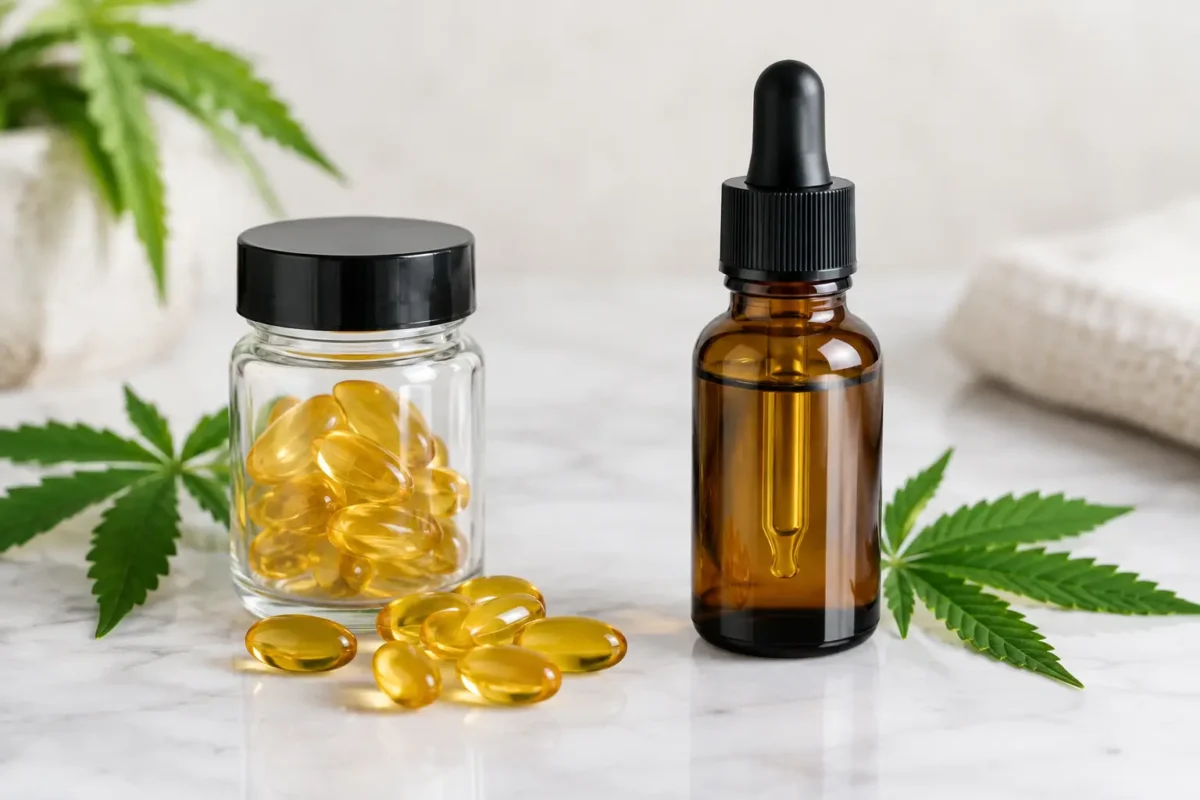
A CBD routine should fit your real life, not create another task to manage. When comparing CBD softgels vs tinctures, the better choice usually comes down to when you want to take CBD, how precisely you want to adjust your serving, and whether you care about taste. Both formats can deliver hemp-derived CBD, but they feel very different in a daily wellness routine.
For a busy schedule, a softgel can be as easy as taking a daily supplement. For flexible timing and adjustable servings, a tincture often has the edge. Here is how to choose with confidence.
CBD Softgels vs Tinctures: The Quick Difference
CBD softgels are pre-measured capsules containing CBD oil. You swallow them with water, just as you would a vitamin. Since each softgel contains a set amount of CBD, there is no measuring, no dropper, and no hemp taste lingering afterward.
CBD tinctures are liquid CBD extracts, typically packaged in a bottle with a graduated dropper. Most people hold a measured amount under the tongue for a short time before swallowing, though directions vary by product. This gives you more control over how much CBD you take at one time.
Neither format is automatically better. The smart choice depends on your preferences, your routine, and the quality of the product in the bottle or capsule.
How Fast Do Softgels and Tinctures Work?
Onset is one of the biggest differences between these two CBD formats. A tincture taken under the tongue may be felt sooner than a softgel because some of the CBD may be absorbed through tissues in the mouth before the rest is swallowed. Many users choose tinctures when they want a more flexible option for their evening wind-down, a stressful afternoon, or a wellness routine that does not need to wait for a meal.
Softgels travel through the digestive system first. That generally means they can take longer to kick in, especially if you have recently eaten. The trade-off is convenience. A softgel is easy to take with breakfast, after dinner, or alongside your other daily supplements without pausing to measure a liquid.
Your body, metabolism, food intake, and the product’s formulation can all affect timing. CBD is not an instant switch, and results vary from person to person. Give a new product time and use it consistently before deciding whether the format works for you.
What about duration?
Because softgels are digested gradually, some customers feel they fit well into an all-day or overnight wellness routine. Tinctures may feel more immediate for some users, but their experience can also vary based on how much they take and whether they swallow the oil quickly.
Rather than chasing the fastest option, think about the moment you want support. Want a simple, repeatable serving at the same time every day? Softgels make sense. Want room to tailor your serving based on the day ahead? A tincture may be the better match.
Dosing: Precision Versus Flexibility
Softgels win on consistency. If a bottle contains 25 mg of CBD per softgel, every serving is 25 mg. That makes it easier to track your routine, especially for first-time CBD buyers who do not want to do dropper math. It also makes softgels travel-friendly. You can pack a few in a supplement organizer without bringing a glass bottle or worrying about a spill.
Tinctures offer a different kind of control. A dropper may be marked in milliliters, allowing you to take a partial or full serving based on the label’s CBD concentration. If you prefer to start low and make gradual adjustments, this flexibility is valuable.
For example, someone using a 1,000 mg CBD tincture may be able to start with a quarter dropper, then slowly adjust over several days if needed. With a softgel, adjusting usually means changing the number of capsules or choosing a different strength.
The key is to read the label carefully. Look for the total CBD per bottle, the CBD per serving, the suggested serving size, and the number of servings. “High strength” on the front label is less useful than knowing exactly how many milligrams you are getting each time.
Taste, Ingredients, and Everyday Convenience
If you dislike the earthy flavor of hemp, softgels are an easy answer. They are flavorless, discreet, and simple to use in public or while traveling. For many adults, this alone makes softgels the most practical daily CBD format.
Tinctures can have a natural hemp flavor, although flavored options may use ingredients like mint, citrus, or berry to make the experience smoother. Some shoppers genuinely prefer the ritual of a tincture, especially when it is part of a nighttime routine with tea, stretching, or a few quiet minutes away from a screen.
The carrier oil matters, too. CBD tinctures are often made with MCT oil, hemp seed oil, or another oil base. Softgels may contain similar oils inside a gelatin or plant-based capsule. If you follow a vegan diet or have ingredient sensitivities, check the full supplement facts panel and allergen information before buying.
Full Spectrum, Broad Spectrum, or CBD Isolate?
The format is only one part of the decision. CBD softgels and tinctures can both be made with full spectrum CBD, broad spectrum CBD, or CBD isolate.
Full spectrum products contain CBD plus other naturally occurring hemp compounds, including trace amounts of federally legal delta-9 THC. Some shoppers prefer this whole-plant profile, but it may not be the right choice for people who are concerned about THC exposure or workplace drug testing.
Broad spectrum CBD includes a range of hemp compounds while typically removing detectable THC. CBD isolate contains CBD only. Neither broad spectrum nor isolate can guarantee a negative drug test, and anyone subject to testing should use caution and speak with an employer or qualified professional when appropriate.
Third-party lab testing matters in every format. A current certificate of analysis should verify cannabinoid content and screen for contaminants such as pesticides, heavy metals, residual solvents, and microbial impurities. At Royale Hemp, product discovery starts with that kind of reassurance: federally legal hemp products, clear details, and quality you can evaluate before you buy.
Who Should Choose CBD Softgels?
CBD softgels are often the best fit if you want a no-fuss routine. They work especially well for adults who value consistent servings, travel often, dislike hemp flavor, or already take vitamins at a set time each day.
They can also be a smart starting point when you know the strength you want. A 10 mg or 25 mg softgel removes the guesswork and helps you maintain the same serving from day to day. The downside is that small dose adjustments are less convenient, and you may need to wait longer to assess how the serving feels.
Who Should Choose CBD Tinctures?
Choose a CBD tincture if flexibility matters most. It is a strong option for shoppers who want to begin with a smaller amount, adjust slowly, or use CBD at different times depending on their routine. Tinctures are also useful if swallowing capsules is difficult.
The trade-off is measurement and taste. While a marked dropper makes dosing manageable, it takes more attention than grabbing a softgel. Keep the bottle upright, use the dropper as directed, and store it away from excessive heat and direct sunlight.
A Better Way to Start Your CBD Routine
If you are new to CBD, start with the lowest reasonable serving listed on a clearly labeled product. Use that serving consistently for several days before making changes. Keep a simple note of the time you take it, whether you took it with food, and how it fits into your day. This approach helps you identify patterns without guessing.
Talk with a healthcare professional before using CBD if you take prescription medications, are pregnant or nursing, or have a medical condition. CBD can interact with some medications, and wellness products should never replace professional medical care.
The right format is the one you will actually use consistently. Pick softgels for clean, dependable convenience, or choose a tincture when personalized serving control is worth an extra minute. Start with quality, verify the lab results, and let your everyday routine guide the decision.

 Hybrid Flower – THCA