
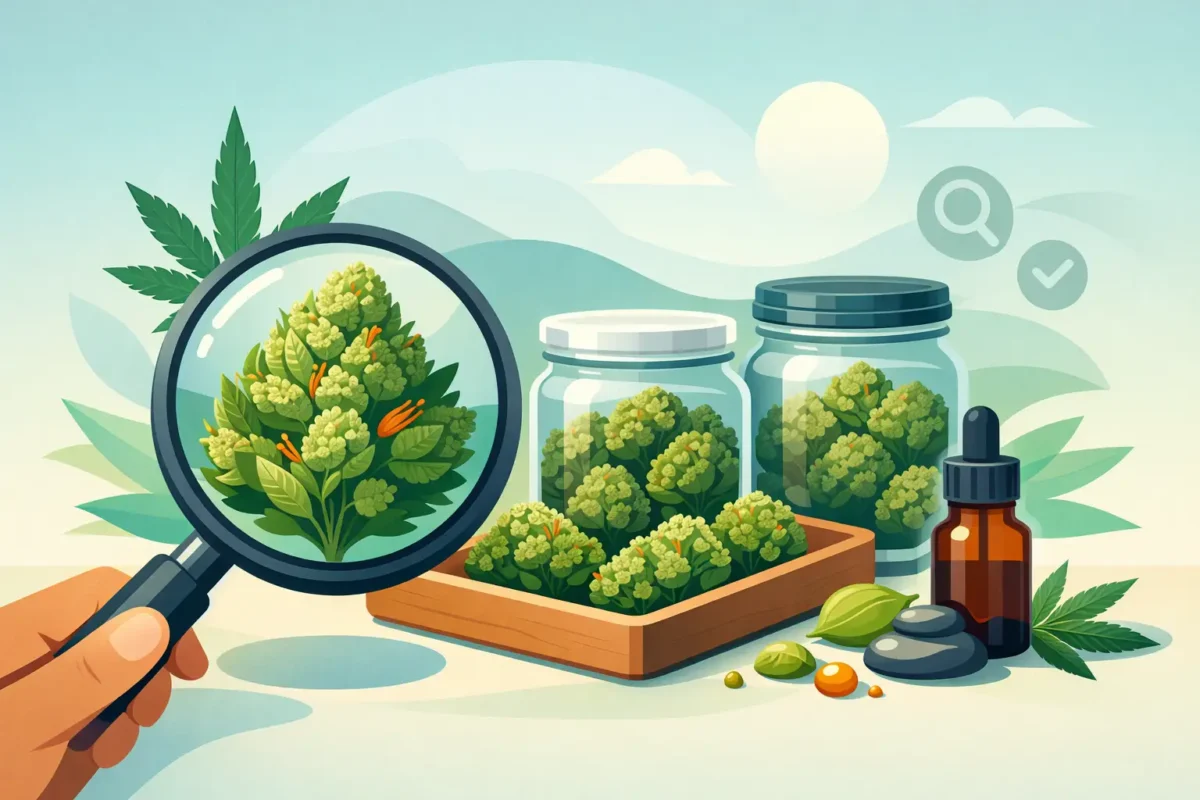
A low price can look tempting until the bag arrives packed with dry, leafy flowers that barely have an aroma. Top shelf hemp buds are different because quality shows up before the first grind: in the cultivation, the cure, the lab results, and the care taken after harvest. For shoppers who want top shelf hemp buds that feel worth their money, learning to read those signals makes all the difference.
“Top shelf” is a popular term, not a federally regulated grade. That means a brand can use it freely, while the real proof lives in the details. The best top shelf hemp buds earn that label through fresh presentation, thoughtful growing practices, transparent testing, and a cannabinoid profile that matches what the shopper actually wants.
What Top Shelf Hemp Buds Should Look and Smell Like
Start with the flower itself. High-quality hemp buds are usually dense without being rock-hard, properly trimmed, and covered with visible trichomes. Those tiny, resinous glands can look frosty or crystalline under good lighting, and they are where much of the flower’s cannabinoid and terpene content is found.
Look for top shelf hemp buds that are dense without being rock-hard, properly trimmed, and covered with visible trichomes.
Color varies by cultivar, so there is no single “right” shade. A bright green flower with orange or purple accents may be beautiful, but appearance alone does not prove quality. What you want to avoid is flower that look excessively brown, dusty, flattened, or filled with loose shake and stems. A premium bag should feel like buds, not leftovers from the bottom of a processing bin.
Top shelf hemp buds should not look excessively brown, dusty, flattened, or filled with loose shake and stems.
Aroma is another fast quality check. Fresh hemp flower should have a clear, noticeable scent when the package is opened. Depending on the strain, that may be citrusy, piney, floral, earthy, sweet, or gassy. The strength of the aroma is not the only factor, but a flat hay-like smell can point to rushed drying, poor curing, or a flower that has been sitting too long.
When considering top shelf hemp buds, a flat hay-like smell can point to rushed drying, poor curing, or a flower that has been sitting too long.
Texture matters, too. Buds should give some when lightly pressed, without crumbling into dust. Overly wet flower is not a win either. Excess moisture can affect the smoking experience and may signal improper storage. The sweet spot is cured flower that breaks apart easily in a grinder while still feeling fresh and resinous.
The Difference Between Pretty Flower and Premium Flower
A polished product photo can make almost any bud look elite. Top shelf quality is more than a photogenic nug. It starts in the field or grow room, where genetics, nutrients, harvest timing, and environmental control influence the final crop.
Recognizing top shelf hemp buds is essential for ensuring quality and satisfaction.
US-grown hemp is often appealing because shoppers can more easily evaluate the source and the standards behind it. Indoor and greenhouse-grown flower may offer more consistency in appearance and density, while outdoor sun-grown hemp can deliver excellent value and expressive terpene profiles. Neither method automatically wins. A well-grown outdoor cultivar can outperform a poorly handled indoor flower every time.
Curing is where many otherwise promising batches lose their edge. After harvest, the flower needs time and controlled conditions to develop its aroma, smoke smoothly, and preserve its natural compounds. Rushed curing often leads to harshness, weak scent, and brittle buds. Properly cured hemp flower tends to have a fuller character—the kind of quality that is noticeable from the jar through the final session.
Properly cured top shelf hemp buds tend to have a fuller character—the kind of quality that is noticeable from the jar through the final session.
Trim quality is worth watching as well. A hand-trimmed or carefully machine-trimmed bud should retain its shape while avoiding excess fan leaf. A little sugar leaf is normal and can carry trichomes. But when a bag is mostly leafy material, the shopper is paying premium pricing for less usable flower.
When shopping, ensure your selection includes top shelf hemp buds that have been carefully trimmed to retain shape without excess fan leaf.
Cannabinoids Should Match Your Goal
The phrase “top shelf” does not tell you whether a product is CBD flower, CBG flower, THCA flower, or a blended cannabinoid option. That distinction matters more than hype.
CBD-rich hemp flower is often chosen by adults building a calming, wellness-focused routine without seeking a traditional high-THC experience. CBG flower appeals to shoppers who want to explore another non-intoxicating cannabinoid. THCA flower is a separate conversation: when heated, THCA converts to THC, and the effects can be much more intoxicating. It may suit experienced adult consumers, but it is not interchangeable with standard CBD hemp buds.
Top shelf hemp buds can offer a unique experience based on the cannabinoid profile you choose.
Before buying, check the listed cannabinoid profile and ask a simple question: what kind of experience am I looking for? A premium flower product should make that answer clearer, not bury it behind vague strain names and oversized potency claims.
Lab Reports Are the Real Top Shelf Standard
If there is one thing that separates a confident purchase from a gamble, it is access to current third-party lab testing. A certificate of analysis, often called a COA, should correspond to the specific product or batch whenever possible.
Access to lab reports can help confirm if your top shelf hemp buds meet the desired standards.
For hemp flower, a useful lab report goes beyond one headline cannabinoid number. It should help verify cannabinoid potency and show whether the product meets applicable hemp compliance requirements. Strong testing practices may also screen for contaminants such as pesticides, heavy metals, residual solvents, microbes, and mycotoxins.
Do not assume that a high cannabinoid percentage automatically means better flower. Potency is only one part of the experience. Terpenes, freshness, curing, and personal tolerance all influence how a strain feels and tastes. A balanced, aromatic flower with clear lab documentation may be a smarter pick than a dry, anonymous product boasting an inflated number.
Choosing top shelf hemp buds should also consider terpenes, freshness, and personal tolerance.
For THCA products, testing deserves even more attention. Hemp laws and state rules can change, and product legality may depend on the testing method, total THC calculation, and where you live. Always review product information and local rules before ordering. Federal hemp status does not override every state or local restriction.
For top shelf hemp buds, testing deserves even more attention to ensure compliance with local regulations.
How to Shop Without Paying for Marketing Alone
Price-conscious shoppers do not have to settle for bottom-shelf flower. The goal is value: a product that delivers clean sourcing, good freshness, and transparent testing at a fair price. Buying a small amount before committing to a larger jar is often the best way to test a new vendor or strain.
Pay attention to package details. A harvest date, batch number, storage guidance, and complete cannabinoid information show more care than generic packaging with no traceability. Airtight containers and sealed pouches also help protect aroma and moisture during shipping and storage.
While shopping, ensure the package clearly represents the top shelf hemp buds you are purchasing.
Reviews can be useful when they describe specifics. Look for comments about bud size, moisture level, smell, smoothness, and whether the flower matched the listed description. Be cautious with reviews that only repeat broad phrases like “fire” or “best ever.” They may be enthusiastic, but they do not tell you what the product is actually like.
At Royale Hemp, the focus is on making product discovery easier by highlighting lab-tested hemp options from curated vendors. That matters when you are comparing a crowded market full of similar-looking jars and bold claims. A reliable storefront should help you understand what you are buying, not pressure you to guess.
Store Hemp Flower the Right Way
Even an excellent flower can lose its character when stored carelessly. Keep buds in an airtight glass container in a cool, dark place away from heat, direct sunlight, and humidity swings. Avoid leaving flower in a hot car, near a stove, or open on a counter for days.
Store your top shelf hemp buds in an airtight container to maintain their quality.
Do not over-handle the buds. Excess handling can knock off trichomes and dry the flower faster. If you buy more than you plan to use quickly, separate a smaller amount for regular use and keep the rest sealed until you need it.
A Better Way to Choose Your Next Bag
When evaluating options, remember that top shelf hemp buds should provide a profile you understand.
The right hemp flower is not always the flashiest or the most expensive option. It is the one with a profile you understand, quality you can inspect, and testing you can verify. For a relaxing evening ritual, a CBD-forward strain with rich terpenes may be the better fit. For a more potent, cannabis-adjacent experience, an adult shopper may prefer properly labeled THCA flower, provided it is permitted where they live.
Top shelf hemp buds should give you more than an attractive nug photo. They should give you confidence in what was grown, how it was handled, and what is in the package. Shop with your senses, read the lab information, and let freshness and transparency carry more weight than flashy marketing.

 Hybrid Flower – THCA