A name like Sour Space Candy, Lifter, or Bubba Kush can tell you a little about a hemp strain’s lineage or flavor direction, but it should never be the whole reason you buy it. Knowing how to compare hemp strains means looking past the catchy name and focusing on the details that shape your experience: cannabinoid content, terpene profile, freshness, growing quality, and verified lab results.
For adult shoppers, that comparison makes the difference between hemp flower that fits a quiet evening, a focused daytime routine, or a flavor-first smoke and hemp that simply ends up forgotten in a drawer. The right strain is personal, but a smart buying process is not guesswork.
How to Compare Hemp Strains by Cannabinoids
Start with the cannabinoid profile. It is the clearest signal of what a hemp strain is designed to offer, although it does not predict every person’s response. Hemp products can feature CBD, CBG, CBN, THCA, delta-8 THC, and other hemp-derived cannabinoids, depending on the product and applicable laws.
CBD-dominant flower is often the natural starting point for shoppers who want a non-intoxicating hemp experience centered on relaxation, balance, or everyday wellness. A strain with higher CBD and very low delta-9 THC may be a better fit for someone easing into hemp flower or building a low-key evening ritual.
CBG-forward strains can appeal to people looking for a brighter, more clear-headed profile. Many customers describe CBG flower as uplifting or more suitable for daytime use, but individual experiences vary. If you are comparing a CBD flower strain against a CBG flower strain, think first about when you plan to use it, not just which percentage is higher.
THCA flower belongs in its own category. THCA is a naturally occurring cannabinoid that converts to delta-9 THC when heated. That means a THCA-rich strain may create intoxicating effects when smoked or vaped, even if the flower meets the federally defined hemp standard based on delta-9 THC by dry weight before heating. Check your local rules and buy only if you are an adult in a location where it is permitted. Do not treat THCA flower like standard CBD flower simply because both are sold under the hemp umbrella.
Percentages matter, but they are not a scorecard. A 24% CBD strain is not automatically better than a 16% CBD strain, and a high total cannabinoid number cannot rescue old, harsh, poorly cured flower. Compare the numbers alongside the full product information.
Compare Terpenes, Not Just Strain Labels
Terpenes are aromatic compounds that give hemp its citrus, pine, floral, peppery, fruity, or earthy character. They also influence the personality people associate with a strain. This is why two CBD strains with similar cannabinoid percentages can feel noticeably different in use.
A strain high in myrcene may lean earthy, herbal, or musky and is commonly chosen for a more laid-back evening vibe. Limonene brings a bright citrus note and is often associated with an upbeat, fresh character. Pinene can smell like pine or rosemary and may appeal to shoppers seeking a crisp, outdoorsy profile. Caryophyllene, which appears in black pepper and cloves, adds spice and depth.
Do not rely only on broad labels such as indica, sativa, or hybrid. Those terms are familiar shorthand, but they do not consistently tell you the exact cannabinoid and terpene makeup of the flower in front of you. A terpene report, aroma description, and current lab results usually give you a more useful comparison.
If you know you dislike diesel-heavy flower, skip strains described as fuel-like or pungent no matter how popular they are. If flavor is a big part of your routine, compare terpene notes as closely as you compare potency. A smooth citrus-forward strain you enjoy using is usually a better purchase than a stronger strain you avoid because the taste is not for you.
Lab Reports Are the Non-Negotiable Filter
At Royale Hemp, third-party testing is central to finding hemp products worth your money. A current certificate of analysis, often called a COA, should match the batch you are considering and come from an independent laboratory.
First, use the report to confirm cannabinoid potency. Look for CBD, CBDA, CBG, THCA, delta-9 THC, and total cannabinoids as relevant to the product. The listing should not make a claim that the report cannot support. Keep in mind that minor variation from the label can happen, but a major mismatch is a reason to move on.
Next, check safety panels. Quality hemp should be screened for pesticides, heavy metals, microbial contaminants, mycotoxins, residual solvents when applicable, and foreign material. Hemp is a bioaccumulator, meaning it can draw compounds from the soil, so clean cultivation and transparent testing matter.
A COA is not exciting marketing, but it is one of the fastest ways to separate carefully sourced flower from a mystery bag. If a seller does not make testing information available, offers an outdated report, or provides a report with no clear batch connection, do not fill the gap with blind trust.
Look Closely at Freshness and Flower Quality
Hemp flower is an agricultural product. It can be beautifully grown and still disappoint if it was stored poorly or sat too long. Freshness affects aroma, moisture, smoothness, and overall enjoyment.
Well-cured buds should have a noticeable natural aroma when you open the package. They should feel slightly springy rather than bone-dry, damp, or crumbly. Excessively dry flower can burn hot and taste harsh. Flower that feels wet, smells musty, or shows any sign of mold should never be used.
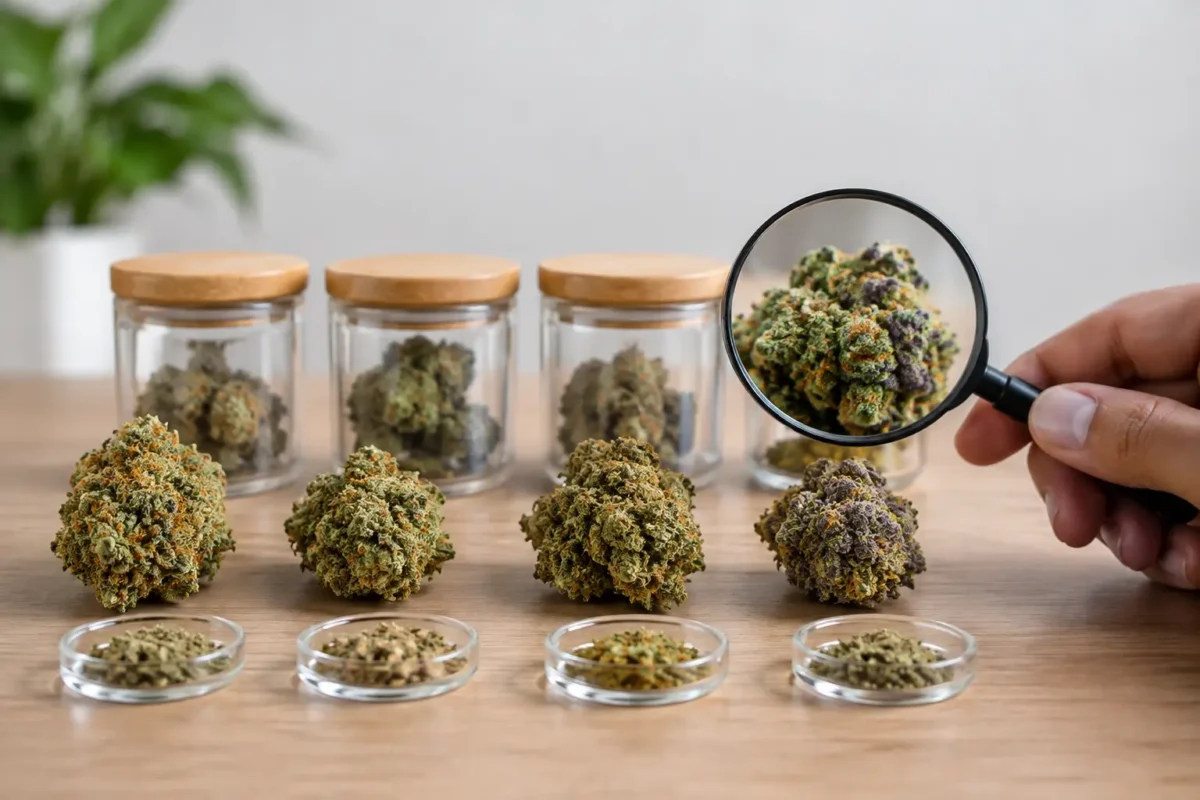
Appearance can help, although it should not outrank lab testing. Look for trimmed buds with visible trichomes, a healthy color, and minimal stems or shake. Outdoor, greenhouse, and indoor hemp can all be worth buying. Indoor flower often has tight visual appeal and strong bag aroma, while sun-grown flower may offer a lower price and a more natural cultivation approach. The better option depends on your budget and what you value most.
Ask yourself whether you want premium small-batch flower for flavor and presentation or a value ounce for regular use. Both can be smart purchases when the testing is solid and the product is honestly described.
Match the Strain to the Format You Will Use
The same strain can perform differently across flower, pre-rolls, vapes, and edibles. Comparing hemp strains without considering format can lead to a mismatch.
Loose flower gives you the most control over how much you use and how you prepare it. It is a strong choice for shoppers who enjoy aroma, grinding, and a more hands-on ritual. Pre-rolls offer convenience, but check whether they use whole-flower ground material and whether the brand identifies the strain clearly.
Vapes are portable and fast-acting, but the ingredient list matters as much as the strain name. Look for transparent cannabinoid and terpene details, and avoid products that are vague about what is in the cartridge. Edibles provide measured servings and longer-lasting effects, but they do not capture a flower strain’s full aroma in the same way. They also take longer to kick in, so patience matters.
For a first try, a smaller amount is usually the smart move. Choose one well-documented strain, use it in a familiar setting, and give yourself time to notice how it fits your routine before buying several varieties at once.
Use Your Goal as the Final Tiebreaker
Two strains can both be clean, fresh, and lab-tested, yet one may still be better for you. Your goal is the final filter. If you want a mellow after-work option, a CBD-forward flower with calming aromatic notes may be more appealing than a sharp, energetic CBG strain. If you want a daytime alternative to your usual routine, a brighter terpene profile and moderate potency may make more sense.
Avoid chasing guaranteed effects. Hemp affects people differently based on tolerance, body chemistry, amount used, setting, and whether other cannabinoids are involved. Think in terms of preferences and possibilities, not promises.
Keep simple notes after trying a strain: the aroma, flavor, format, amount, time of day, and whether you would buy it again. After a few purchases, those notes become more useful than any generic strain chart. You will know whether you reach for citrus terpenes on busy afternoons, richer earthy flower at night, or a balanced CBD strain whenever you want to keep things easy.
The best hemp strain is not necessarily the most potent or the most expensive. It is the one with transparent testing, clean quality, a profile you genuinely enjoy, and a place in your real life. Start there, trust the details, and let each well-chosen strain teach you what to try next.
📅 Last updated:

 Edibles
 Hybrid Flower – THCA