
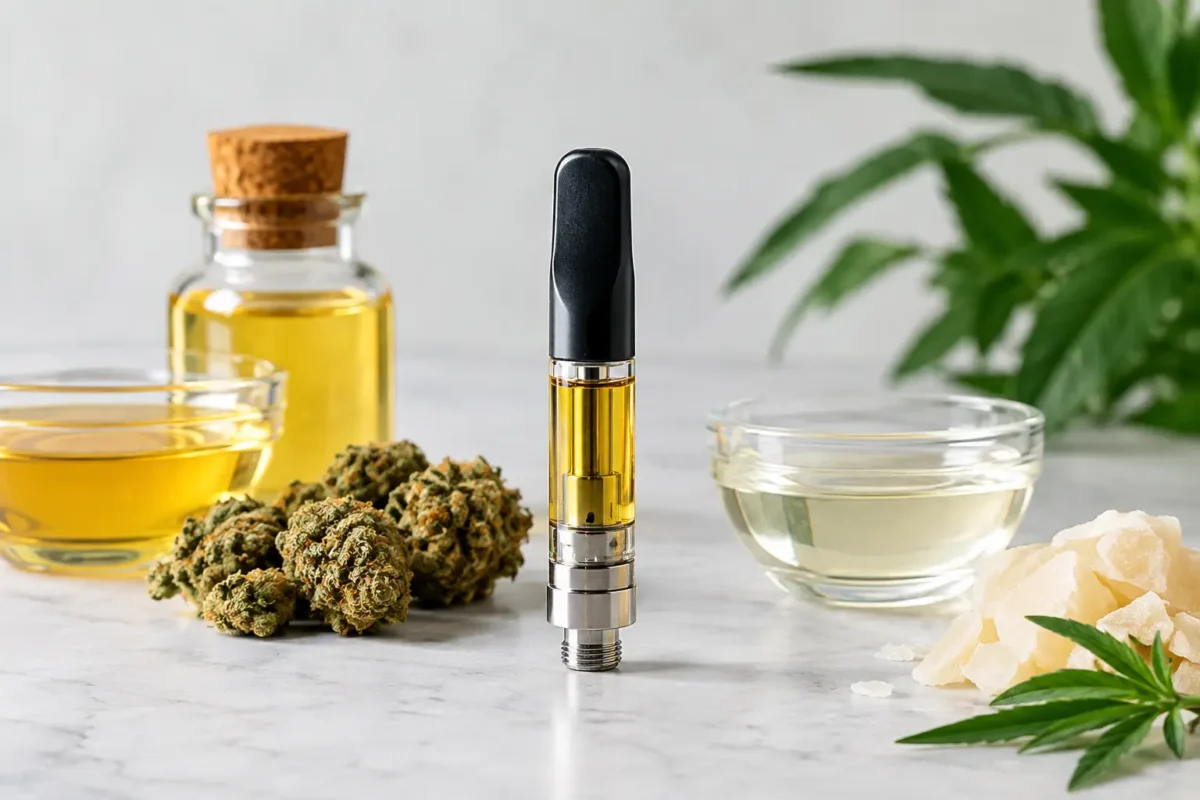
A vape cartridge can look simple: a small glass tank, a mouthpiece, and oil. But the label can tell a very different story. This vape cart ingredients explained guide breaks down what belongs in a quality hemp vape, what deserves a second look, and how to shop with more confidence.
For adult shoppers, the goal is not to find the longest ingredient list. It is to find a clearly labeled formula with cannabinoids you recognize, a terpene profile that makes sense, and recent third-party lab results that back up the brand’s claims.
What Is Inside a Hemp Vape Cartridge?
Most hemp vape carts contain a cannabinoid extract and, in many cases, added terpenes. The exact formula depends on whether the cart is made with distillate, live resin, rosin, or another extract style.
A straightforward formula may contain hemp-derived cannabinoids and cannabis-derived or botanical terpenes. Some products include flavoring compounds or thinning agents to alter taste or oil consistency. Those additions are where ingredient transparency matters most.
The oil itself is only one part of the product. A complete cartridge also includes hardware: a tank, heating element, wick or ceramic core, mouthpiece, and metal connections. A trustworthy brand should take both the oil and the hardware seriously, since heat and material quality affect the overall experience.
Cannabinoids: The Main Active Compounds
Cannabinoids are the compounds most shoppers are looking for. Depending on the product, a cart may feature CBD, CBG, CBN, delta-8 THC, delta-9 THC derived from hemp, THCA, HHC, or a blend of several cannabinoids.
CBD carts are often chosen by adults who want a non-intoxicating hemp option for their wellness routine. CBG and CBN may appear in blends designed around daytime or evening preferences, although individual experiences vary. Delta-8, hemp-derived delta-9, HHC, and similar cannabinoids can be intoxicating, so start cautiously and never treat a product’s name as a guarantee of how it will feel for you.
The label should identify the primary cannabinoid or blend and state the amount per cartridge, usually in milligrams. A one-gram cart with 900 mg of total cannabinoids is not the same as a one-gram cart with 600 mg of cannabinoids plus a large amount of added ingredients. Potency is useful information, but it is not the whole quality story.
Terpenes: Aroma, Flavor, and Character
Terpenes are aromatic compounds found in hemp and many other plants. They help create the citrus, pine, fruit, herbal, or fuel-like notes associated with different strains and flavor profiles. They can also influence how a vape feels subjectively, which is why shoppers often pay attention to strain names and terpene descriptions.
You may see cannabis-derived terpenes or botanical-derived terpenes on a product label. Cannabis-derived terpenes are extracted from cannabis or hemp plants. Botanical terpenes come from other natural plant sources but may be formulated to resemble familiar cannabis strain profiles.
Neither source automatically makes a cart better. Cannabis-derived terpene blends may appeal to shoppers looking for a more plant-forward profile, while botanical blends can provide consistent flavor at a lower cost. What matters is clear disclosure, sensible formulation, and testing for the finished product.
Vape Cart Ingredients Explained: What to Question
Not every ingredient that can be used in a vape cart is a good reason to buy one. A short, transparent formula is often easier to evaluate than a vague “proprietary blend.” If a brand will not tell you what is in the oil, it has not earned your trust.
Be especially careful with carts that list thinning agents without context. Propylene glycol (PG) and vegetable glycerin (VG) are common in nicotine e-liquid, but they are not necessary in every cannabis or hemp oil cartridge. Medium-chain triglyceride (MCT) oil is another ingredient shoppers may encounter. It is widely used in oral tinctures, but many informed buyers prefer it not be used in inhalable cannabis products.
Avoid products that contain vitamin E acetate. This ingredient has been strongly associated with serious lung injuries when used in illicit THC vape products. Reputable hemp brands should clearly confirm that their carts are free from vitamin E acetate and should make finished-product lab reports available.
Artificial flavors are another trade-off. They may create a candy-like taste, but they can also make it harder to understand what is actually in the formula. If flavor is a priority, look for a brand that identifies its terpene or flavor source instead of relying on broad claims like “premium flavoring.”
Why the Extraction Method Matters
The ingredient list does not always explain the full character of a cart. The extraction method provides valuable context.
Distillate is highly refined cannabinoid oil. It can be potent, versatile, and affordable, which makes it common in hemp carts. Because much of the original plant aroma is removed during refinement, manufacturers often add terpenes back into the final formula.
Live resin is generally made from freshly frozen hemp or cannabis material rather than dried flower. It is valued for preserving a broader range of aromatic plant compounds. Live resin carts may have a more pronounced, strain-like flavor, though quality still depends on the source material and production standards.
Rosin is a solventless extract made with heat and pressure. It is often positioned as a premium option because it avoids hydrocarbon solvents during extraction. That does not mean every rosin cart is automatically superior, but it can be a strong choice for shoppers who prefer a simpler processing approach.
Read the Lab Report Before You Buy
Third-party testing turns a label into something you can verify. For hemp vape carts, a certificate of analysis, often called a COA, should match the specific product or batch whenever possible.
Start with the cannabinoid panel. It should show whether the advertised CBD, delta-8, THCA, or other cannabinoid is present at an amount close to the label claim. For federally legal hemp products, the report should also show compliant delta-9 THC levels on a dry-weight basis. State laws can differ, and hemp-derived intoxicating products are not permitted everywhere, so always check the rules where you live.
Then look for safety testing. A thorough report may screen for pesticides, heavy metals, residual solvents, microbial contaminants, and mycotoxins. This is particularly relevant for vape oil because contaminants can become more concerning when heated and inhaled.
Do not rely only on a QR code printed on the box. Scan it, make sure it leads to a readable report, and check that the product name, batch number, and test date make sense. A generic lab report with no product connection offers far less reassurance than a current, batch-specific result.
A Better Way to Choose Your Next Cart
Start by deciding what experience you want. A CBD-focused cart may fit a non-intoxicating wellness routine, while a delta-8, hemp-derived delta-9, HHC, or THCA product calls for a more cautious approach because effects may be intoxicating. If you are new to hemp vapes, choose a lower-intensity option and take one small puff before waiting to assess how you feel.
Next, favor products that make the essentials easy to find: cannabinoid amounts, terpene source, extract type, ingredient list, and third-party testing. Price matters, especially for regular shoppers, but an unusually cheap cart with unclear ingredients is rarely a real bargain.
Hardware deserves attention, too. Ceramic heating elements are popular because they can provide even heating and clean flavor. Keep your cartridge upright when possible, avoid leaving it in a hot car, and use the voltage range recommended for the cart. Excessive heat can scorch terpenes and make even a well-made oil taste harsh.
At Royale Hemp, we believe hemp shopping should feel clear, not complicated. Look for brands that treat transparency as part of the product, not a footnote after checkout.
A good vape cart does not need mystery ingredients or oversized promises. Choose one with a formula you can read, a lab report you can verify, and a cannabinoid profile that matches your comfort level. That is the kind of confidence worth carrying into your next purchase.

 Hybrid Flower – THCA