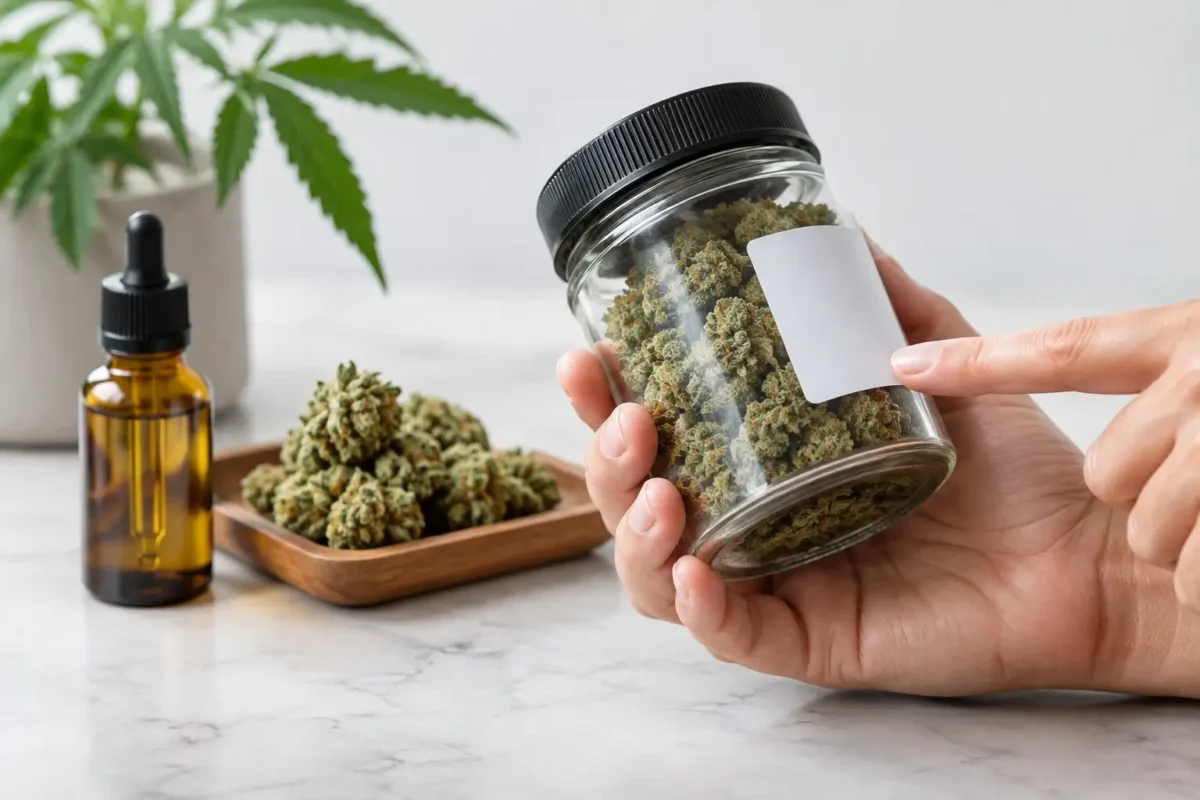
A jar marked 28% THCA can look straightforward until you compare it with another flower labeled 24% total cannabinoids or 0.3% delta-9 THC. So, what is THCA potency? It is a measurement of how much tetrahydrocannabinolic acid, or THCA, is present in a hemp product, usually expressed as a percentage of its dry weight. That number can help you compare products, but it does not tell the entire story about quality, effects, or how a product may fit your routine. Understanding what THCA potency is can greatly enhance your selection process.
For adult hemp shoppers, reading potency correctly is one of the best ways to buy with confidence. Whether you want a mellow evening strain, a more noticeable cannabinoid experience, or simply lab-tested flower at a fair price, the label and certificate of analysis should work together.
What Is THCA Potency on Hemp Flower?
THCA is a naturally occurring cannabinoid found in fresh and cured cannabis and hemp flower. In its raw form, THCA is different from delta-9 THC. When exposed to heat through smoking, vaping, or another heating method, THCA converts into THC through a process called decarboxylation.
THCA potency tells you the concentration of THCA in the product before that conversion. If a flower label says 25% THCA, that means roughly 25% of the flower’s dry weight is THCA. In practical terms, a one-gram serving of that flower contains about 250 milligrams of THCA before heating.
When assessing cannabis, many ask, what is THCA potency? It’s essential to grasp its implications for experience and effectiveness.
A higher THCA percentage generally signals greater potential for a stronger experience once the flower is heated. But higher is not automatically better. A 30% THCA flower with a thin aroma, rough smoke, or poor cure may be less enjoyable than a fresh, flavorful 22% option with a terpene profile that suits your preferences.
A deeper understanding of what is THCA potency can help users make informed decisions about their cannabis choices.
THCA Percentage vs. Potential THC
The most common point of confusion is assuming that THCA converts to THC milligram for milligram. It does not. THCA loses a small portion of its molecular weight as it converts, which is why the standard calculation uses a conversion factor of 0.877.
The basic formula is:
Potential THC = THCA percentage x 0.877 + delta-9 THC percentage
For example, consider a flower with 25% THCA and 0.25% delta-9 THC. Its estimated potential THC is
25 x 0.877 = 21.93
Ultimately, the concept of what is THCA potency is crucial for anyone looking to optimize their cannabis experience.
Add the 0.25% delta-9 THC already present, and the estimated total potential THC is about 22.18%.
This is an estimate, not a promise of a specific outcome. Heating temperature, smoking or vaping technique, moisture, storage, and individual tolerance all affect how much cannabinoid content is actually converted and experienced. Still, potential THC is useful when comparing THCA flower with similar products.
Why the label may show different numbers
A product page or package may list THCA, delta-9 THC, total THC, total cannabinoids, or all of the above. These values are related, but they are not interchangeable.
THCA is the raw acidic cannabinoid. Delta-9 THC is the cannabinoid measured before heating. Total THC usually estimates the amount available after THCA conversion. Total cannabinoids can include THCA, CBD, CBDA, CBG, CBC, and other compounds, so it is a broader number rather than a direct measure of THCA strength.
To summarize, what is THCA potency is a fundamental question every consumer should consider before making a purchase.
When you are shopping specifically for THCA flower or THC pre-rolls, look first at the THCA percentage and then check the lab report for delta-9 THC and total THC. That gives you a clearer picture than relying on a large total-cannabinoid number alone.
What THCA Potency Does Not Tell You
This brings us back to the essential question: what is THCA potency? Understanding this will enrich your comprehension of cannabinoid profiles.
Potency matters, but it is only one part of the product. Two flowers with identical THCA percentages can feel and taste very different.
Terpenes are a major reason why. These aromatic compounds contribute to a strain’s scent and flavor and may shape the overall character of the experience. For example, a flower with bright citrus notes may appeal to someone seeking an uplifting daytime option, while a gassy, earthy profile may be better suited to a laid-back evening. Your response is personal, and terpene preferences often matter more over time than chasing the highest percentage.
Freshness also counts. Well-cured, properly stored flower should have a noticeable aroma, a comfortable moisture level, and intact trichomes. An old or overly dry flower can lose aroma and smoke harshly, even if the original lab test showed impressive THCA potency.
Finally, the serving method changes the experience. A pre-roll may burn differently than loose flower. A dry-herb vaporizer may deliver a cleaner flavor profile than combustion. Start with a small amount, wait to assess how you feel, and avoid combining intoxicating cannabinoid products with alcohol or other substances that can impair judgment.
How to Read a THCA Lab Report
Third-party testing is where confident shopping starts. A certificate of analysis, often called a COA, should match the exact product or batch you are considering. A QR code on the package is helpful only if it leads to a current, readable report from an independent laboratory.
When reviewing a COA, check that the product name or batch number matches. Then find the cannabinoid panel and locate THCA, delta-9 THC, and total THC if listed. Results may appear as percentages or milligrams per gram. Since 1% equals approximately 10 milligrams per gram, 25% THCA is roughly 250 milligrams of THCA per gram.
A complete report should also include safety screening. Look for results covering pesticides, heavy metals, microbial contaminants, residual solvents when applicable, and mycotoxins. A high-potency product is not a smart value if it does not come with credible testing.
At Royale Hemp, the goal is to make product discovery less complicated by focusing on lab-tested, curated hemp options. Still, every shopper should take a minute to review the batch details. That small step helps you compare products on facts, not just bold package claims.
In the end, knowing what is THCA potency can improve your experience with hemp products significantly.
Choosing the Right THCA Strength for You
Reflecting on the question of what is THCA potency can guide you towards a more tailored cannabis experience.
There is no universal “best” THCA percentage. The right range depends on your experience level, intended use, and how you respond to hemp-derived cannabinoids.
Ultimately, understanding what THCA potency is is critical to navigating your preferences in the world of hemp.
First-time shoppers may prefer starting in a moderate range, often around 15% to 22% THCA, especially if they are unfamiliar with inhalable THCA products. More experienced consumers may seek flower testing in the mid-20s or higher. But if you have a low tolerance, a high-potency flower can become overwhelming quickly, particularly in a large pre-roll where it is easy to consume more than planned.
Think about the format, too. A one-gram pre-roll may be convenient, but it is not necessarily a single serving. Take one or two small puffs, set it aside, and give yourself time before continuing. With loose flower, you have more control over how much you prepare at once.
If your goal is relaxation, do not assume the highest THCA number is the shortest route there. A balanced, terpene-rich flower that you enjoy using at a comfortable dose may better support your routine than a stronger product that feels like too much.
Legality and Responsible Shopping
In today’s market, knowing what THCA potency is is more important than ever for responsible consumers.
Hemp-derived THCA products exist in a changing legal landscape. Federal hemp rules focus on delta-9 THC concentration on a dry-weight basis, while states may apply additional restrictions or use total THC standards. Availability, possession rules, age requirements, and shipping eligibility can vary by location.
Always review your state and local rules before ordering or traveling with THCA products. Buy only from sellers that provide transparent testing, clear product information, and adult-use guidance. Adults who are pregnant or nursing, people with medical conditions, and anyone taking medication should speak with a qualified healthcare professional before using cannabinoid products.
Thus, asking what the THCA potency is can lead to a more informed and rewarding shopping experience.
Do not drive, operate machinery, or make safety-sensitive decisions after using intoxicating hemp products. Store flower and pre-rolls securely, away from children and pets.
A THCA percentage is a useful starting point, not a finish line. Choose a tested product, read the batch report, respect your tolerance, and let aroma, freshness, and your own preferences guide the final decision.
In conclusion, understanding what THCA potency is not only enhances your knowledge but also elevates your experience.
So remember, whenever you’re in doubt, just ask yourself, what is THCA potency, and you’ll be on your way to making better choices.

 Hybrid Flower – THCA