
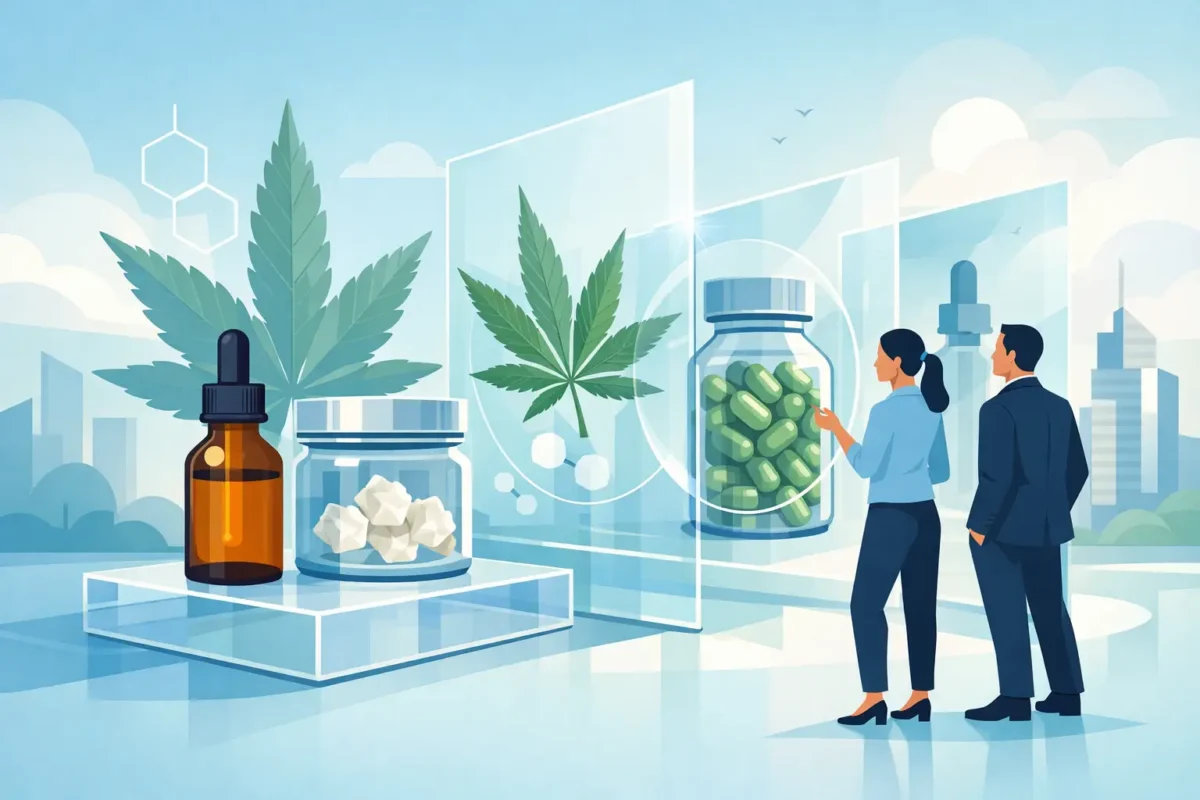
A great THCA flower purchase should not feel like a guessing game. The future of THCA products belongs to brands and retailers that can show shoppers exactly what is in the jar, how it was grown, and what to expect before they ever light up or load a vape.
The future of THCA products is bright, with innovations emerging that cater to consumer preferences.
For adult hemp shoppers, THCA has created a new lane between traditional CBD and state-regulated cannabis. It offers a familiar flower experience, diverse genetics, and convenient formats while keeping product discovery accessible online in many areas. But the category is growing up quickly. The next wave will not be defined solely by the loudest strain names or the cheapest ounces. Freshness, testing, regulation, better formulation, and smarter buying habits will shape it.
As we explore the future of THCA products, it is critical to think about consumer education and product transparency.
Why THCA Is Changing the Hemp Conversation
THCA, or tetrahydrocannabinolic acid, is a cannabinoid found in raw cannabis and hemp plants. In its natural form, it is not the same as delta-9 THC. When THCA is heated through smoking, vaping, or cooking, it converts into THC through a process called decarboxylation. That chemistry is why THCA flower has become a major point of interest for consumers seeking a more traditional cannabis-style experience from hemp-derived products.
Understanding the future of THCA products requires grasping the significance of proper decarboxylation processes.
Its rise also reflects what shoppers have been asking for: more choice. CBD remains a staple for wellness-minded customers, but not every adult shopper wants the same calm, non-intoxicating experience. THCA flower, pre-rolls, concentrates, and vapes give consumers more ways to compare cannabinoid profiles, terpene character, potency, and format.
In the future of THCA products, consumers will demand even more diverse and tailored experiences.
Still, the category has a responsibility problem to solve. A strain name and a high number on a package do not tell the whole story. A product can look premium online and arrive dry, harsh, poorly trimmed, or supported by incomplete testing. The brands that last will make quality easy to verify rather than asking customers to take marketing claims on faith.
The Future of THCA Products Will Be More Selective
The future of THCA products emphasizes quality over branding noise.
Early-stage categories often reward novelty. Mature categories reward consistency. That shift is already underway with THCA.
Consumers are becoming more educated about flower structure, curing, aroma, terpene profiles, and batch dates. They are learning that a sky-high THCA percentage does not automatically create the best session. Freshness, cultivar quality, cultivation practices, moisture level, and how a flower was handled after harvest can matter just as much. A well-cured, aromatic flower with a balanced cannabinoid and terpene profile may be more enjoyable than a brittle bud marketed around one oversized potency number.
This is good news for shoppers. It puts the focus back on the details that separate top-shelf hemp from average inventory: dense, properly cured buds; honest product photos; useful strain descriptions; clear weight options; and recent third-party lab reports tied to the actual batch.
It also gives quality-focused retailers a bigger role. Royale Hemp’s job is not simply to put more products in front of customers. It is to help make the choice easier by highlighting affordable, lab-tested options and the information shoppers need to choose with confidence.
Lab reports will become a baseline, not a bonus.
A focus on the future of THCA products means prioritizing consumer safety and information access.
A certificate of analysis, commonly called a COA, should be part of the shopping experience. In the strongest version of this category, customers will be able to review cannabinoid results, check that the batch matches the package, and see screening for contaminants such as pesticides, heavy metals, residual solvents, microbial impurities, and mycotoxins where relevant.
A COA does not replace good judgment, and lab testing is only as useful as the lab report is current and product-specific. Still, it is one of the clearest signals that a seller takes product transparency seriously. Shoppers should be cautious when testing is missing, difficult to locate, unrelated to the listed batch, or limited to potency alone.
Better storage will matter more than bigger claims.
The future of THCA products will hinge on effective storage and handling practices.
THCA hemp flower is an agricultural material, not a shelf-stable novelty item. Light, heat, air, and time can affect aroma, texture, and overall quality. Expect stronger brands to put more thought into packaging, humidity control, harvest information, and inventory turnover.
For shoppers, that means checking how products are packaged and buying an amount that fits realistic use. A first-time customer may be better served by a smaller jar or pre-roll option than a large quantity of an unfamiliar strain. Value matters, but a bargain is not a bargain if the flower sits around too long.
Formats Will Expand, but Flower Will Set the Standard
As we look at the future of THCA products, flower will continue to set the quality benchmark.
Flower will likely remain the heart of the THCA category because it offers the most direct connection to the plant. Shoppers can inspect bud structure, smell the terpene profile, and choose among indica-leaning, sativa-leaning, and hybrid-style cultivar descriptions. For many experienced consumers, that ritual is part of the appeal.
Pre-rolls will continue to grow because they remove the grinding and rolling step. The trade-off is that buyers have less ability to inspect the material inside. That makes transparent sourcing especially valuable. A quality pre-roll should identify its cannabinoid content, provide accessible testing, and avoid vague language that hides whether it contains whole flower, shake, trim, or infused material.
Understanding the future of THCA products will involve scrutinizing pre-roll quality.
Vapes and concentrates will also keep evolving. They offer convenience and can provide a more discreet option, but they require an even higher standard of ingredient transparency. Customers should know whether a vape uses live resin, distillate, cannabis-derived terpenes, botanical terpenes, or added flavoring. A clear ingredient list and full-panel testing are not extras in inhalable products. They are part of a responsible purchase.
Edibles may become a bigger part of the conversation, although they require patience and careful dosing. Heating during production can change how cannabinoids are expressed, and effects can vary by formula and individual tolerance. Adults trying any intoxicating hemp-derived edible should start with a low serving, wait long enough before taking more, and avoid mixing it with alcohol or other impairing substances.
New developments in the future of THCA products will enhance the edible segment.
Regulation Will Reward Honest Brands
Brands committed to the future of THCA products will prioritize honesty and compliance.
The legal landscape remains one of the biggest forces shaping the future of THCA products. Federal hemp law, state rules, product testing requirements, and enforcement priorities do not always line up neatly. A product marketed as hemp-derived may be treated differently depending on where a customer lives, how it is tested, and how state law defines permitted cannabinoids or total THC.
That means shoppers should never assume every THCA product can ship to every address. Responsible sellers monitor restrictions, follow age requirements, and communicate when a product is unavailable in a particular state. Consumers should also review their local laws before ordering or traveling with hemp products.
The long-term winners will not treat compliance as a footnote. They will make it part of the customer experience. Clear age gates, state-specific shipping policies, accurate labels, current COAs, and realistic product descriptions protect both the buyer and the business. This may reduce some of the free-for-all energy seen in the early THCA market, but it should also create a more dependable category.
The future of THCA products will benefit from a consumer-first approach to regulations.
Smarter Shopping Will Define the Next Era
The best THCA product is not necessarily the strongest option or the most expensive one. It is the one that matches a shopper’s preferences, budget, tolerance, and intended setting. Someone looking for a laid-back evening may prefer a different aromatic profile and format than someone who values a social, creative, or daytime-oriented experience. Effects are personal, and strain labels are useful starting points rather than guarantees.
Shoppers will need to adapt to the evolving future of THCA products and their nuances.
Before buying, adult shoppers should consider a few practical questions. Is there a recent, batch-specific COA? Does the seller explain the product clearly? Is the flower fresh and properly packaged? Are the cannabinoid numbers presented honestly? Is the format appropriate for the customer’s experience level? These checks take only a moment, yet they can prevent disappointing purchases.
THCA products are for adults only and may be intoxicating when heated. Do not drive, operate machinery, or make safety-sensitive decisions after use. People who are pregnant, nursing, managing a medical condition, or taking medication should speak with a qualified healthcare professional before trying cannabinoid products. These products are not intended to diagnose, treat, cure, or prevent any disease.
The future of THCA products will also involve enhanced consumer education about safety.
The most exciting part of this category is not that there will be more THCA products. There will be better reasons to trust the ones you choose. As the market becomes more transparent, shoppers can put less energy into decoding hype and more into finding fresh, tested hemp products that genuinely fit their routine.
Ultimately, the future of THCA products is about aligning with consumer needs and preferences.
📅 Last updated:

 Edibles
 Hybrid Flower – THCA